Seams
Open Seams at Membrane Laps
Edges of TPO or EPDM laps lift where the weld or seam tape let go. Water follows the lap into the insulation and shows up as a stain far from the opening.

As a Greenwood commercial roofing contractor, we install TPO, EPDM, and metal roofs on Indiana business buildings, starting with a walk across your roof.
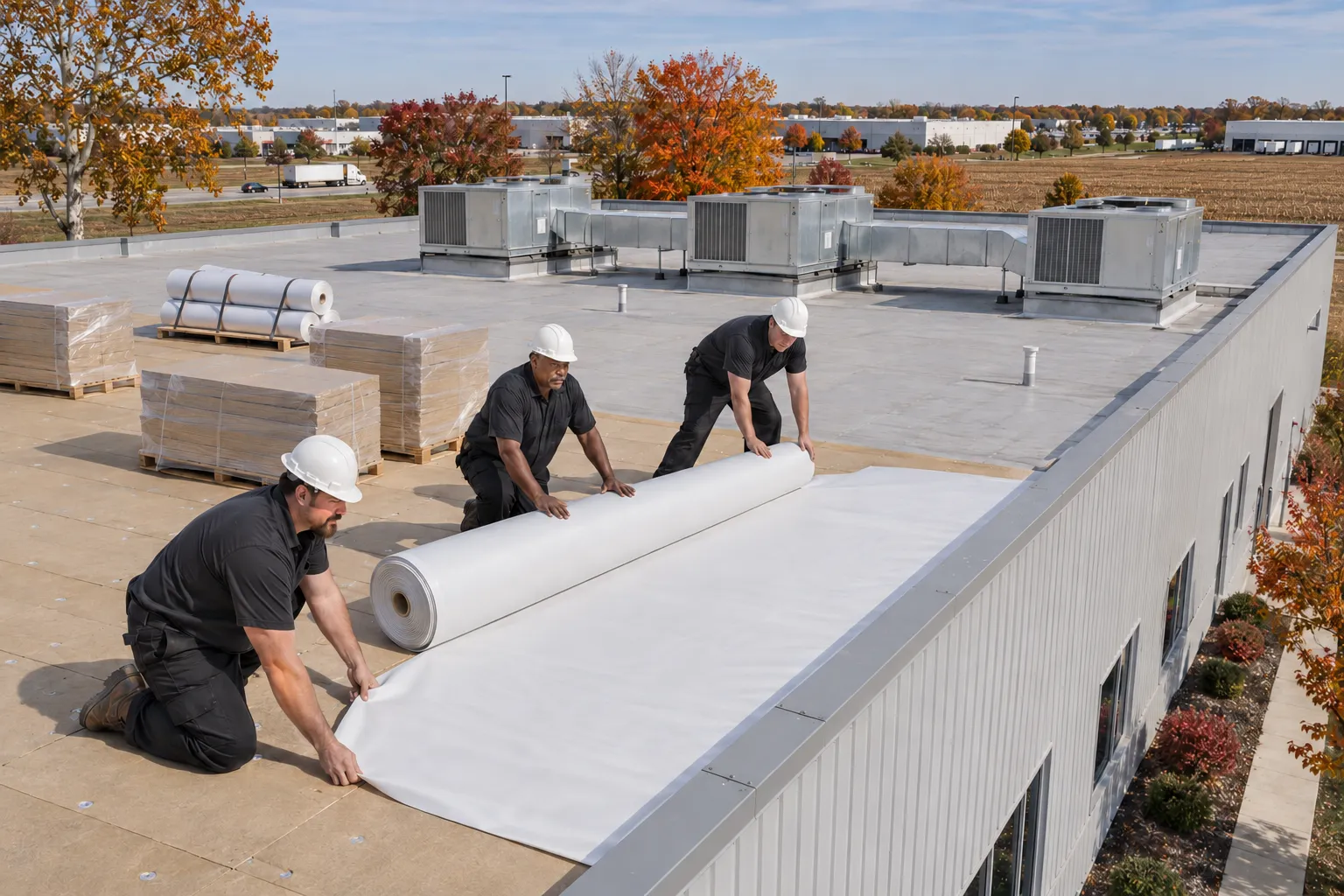
Greenwood commercial roofing work usually starts with something a building manager can see. These six conditions bring most owners to call us.
Edges of TPO or EPDM laps lift where the weld or seam tape let go. Water follows the lap into the insulation and shows up as a stain far from the opening.
Ponding rings stay behind after rain when drains sit high or insulation has crushed. Standing water ages the membrane and freezes at the drain bowl each winter.
Rooftop unit curbs, parapets, and pipe boots move with heat and wind. When base flashing peels back, a leak starts at the curb while the field membrane still looks fine.
Soft spots underfoot and ceiling stains after dry weather point to trapped water. A core cut shows how far it spread, and that decides repair, recover, or tear-off.
Exposed-fastener panels loosen as the building heats and cools. Washers crack, screws back out, and rust starts around each hole along the panel laps.
Older EPDM pulls away from parapet walls and cracks at corners, and aged TPO chalks and stiffens. At that point patches stop holding and replacement enters the plan.
Large low-slope warehouse roofs are where a new roof pays off quickest. Use these two lists to see whether your building needs a new roof or a repair first.
We install four commercial roof systems. Each card lists the slope, seam method, and building type that system fits.
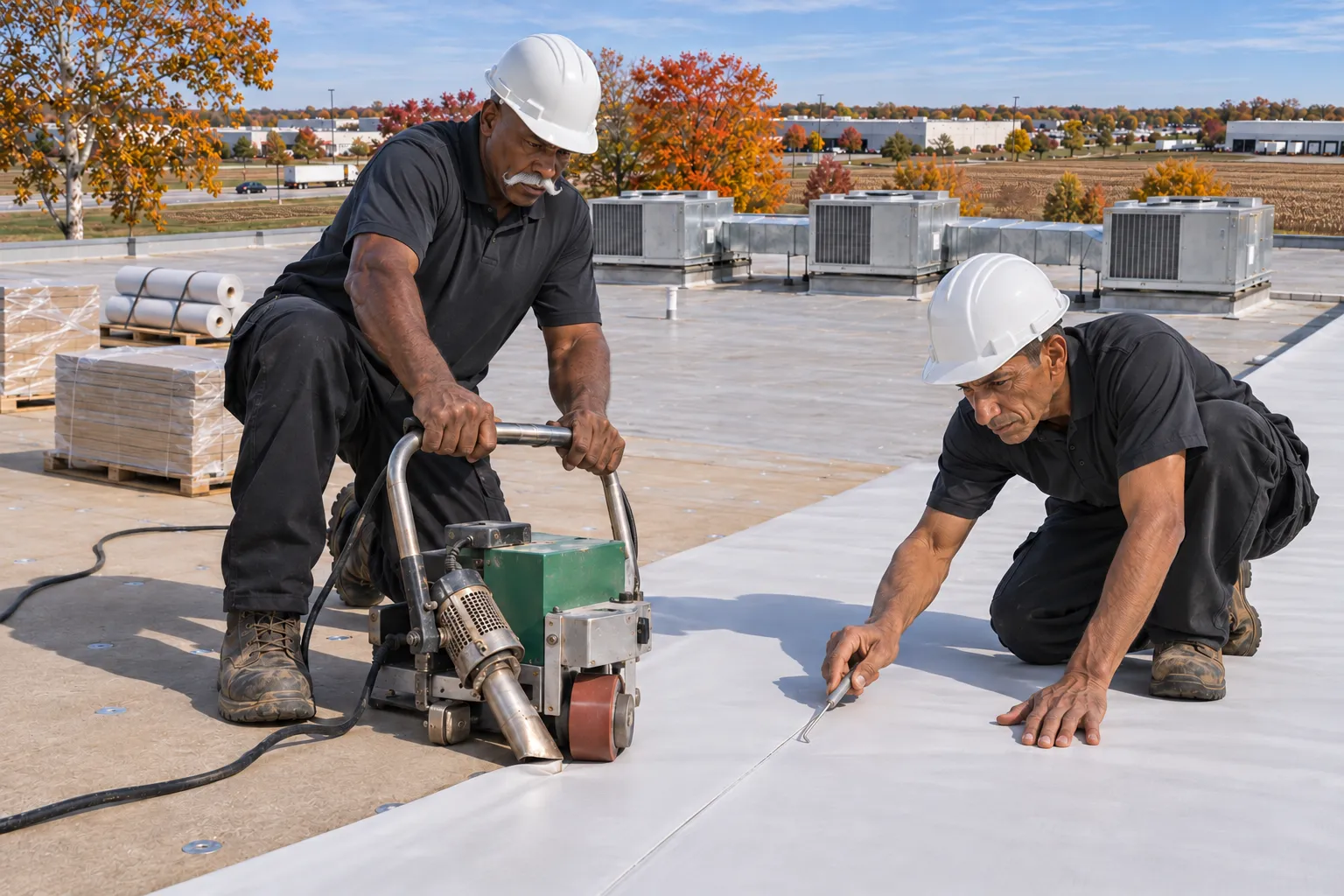
White single-ply membrane with hot-air welded laps. It reflects summer sun off big cooling loads and handles rooftop units with premade flashing pieces.
TPO Roofing in Greenwood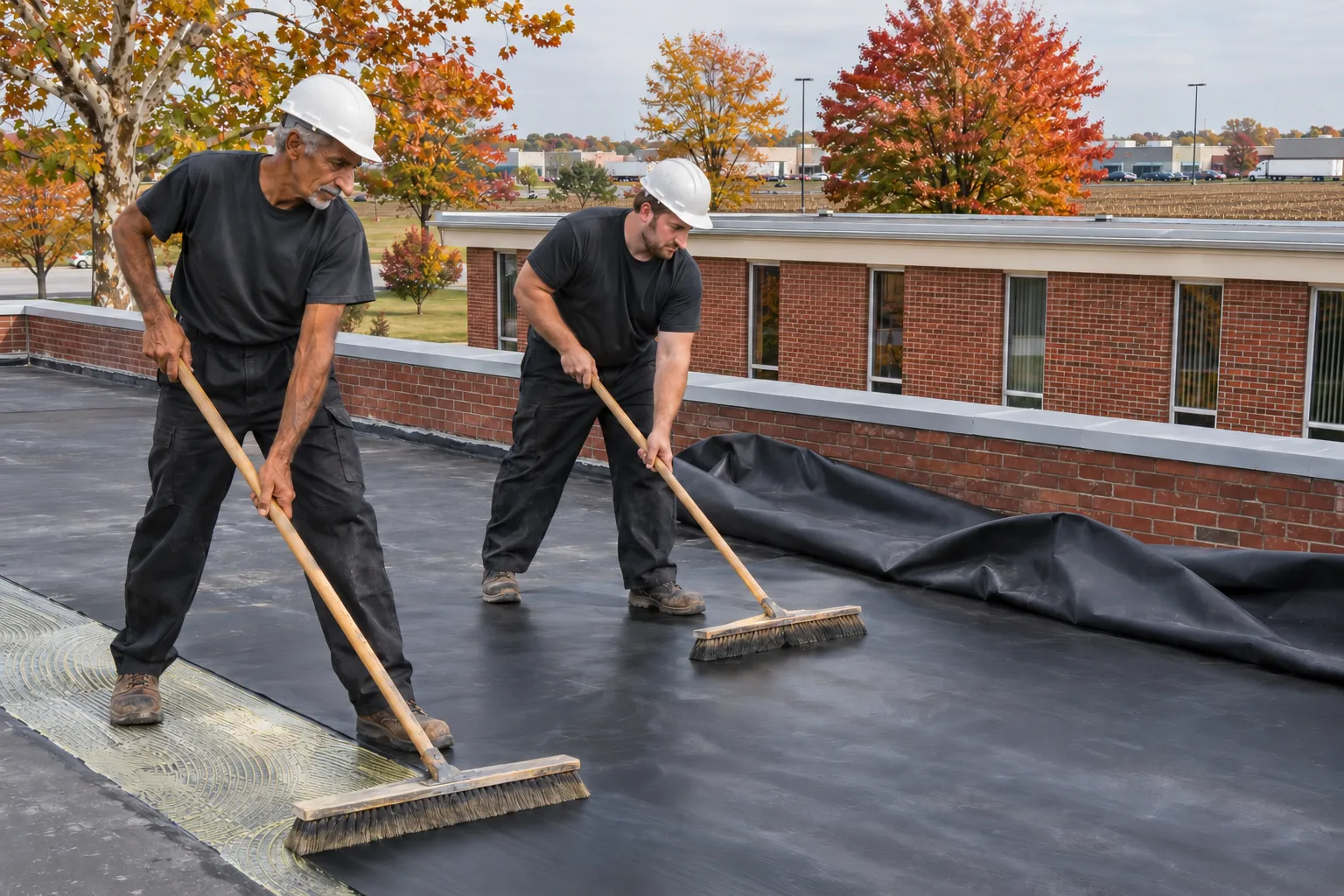
Black rubber sheets laid in wide rolls with few seams. EPDM stays flexible through cold Indiana winters and suits roofs with light foot traffic.
EPDM Roofing in Greenwood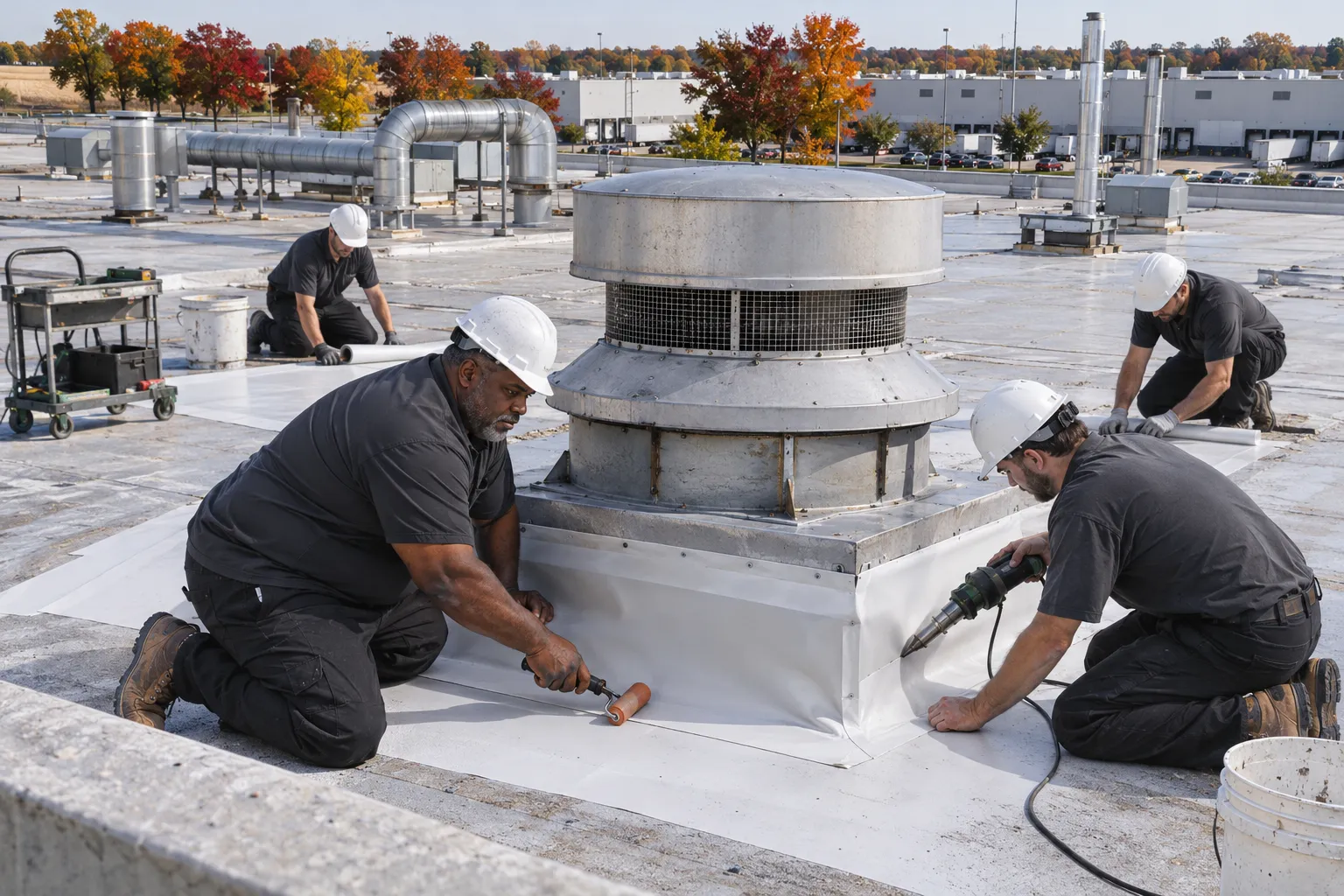
Plant roofs carry exhaust fans, heavy curbs, and process stacks. We pick the membrane for what vents through the roof and stage the work over live floors.
Industrial Roofing in Greenwood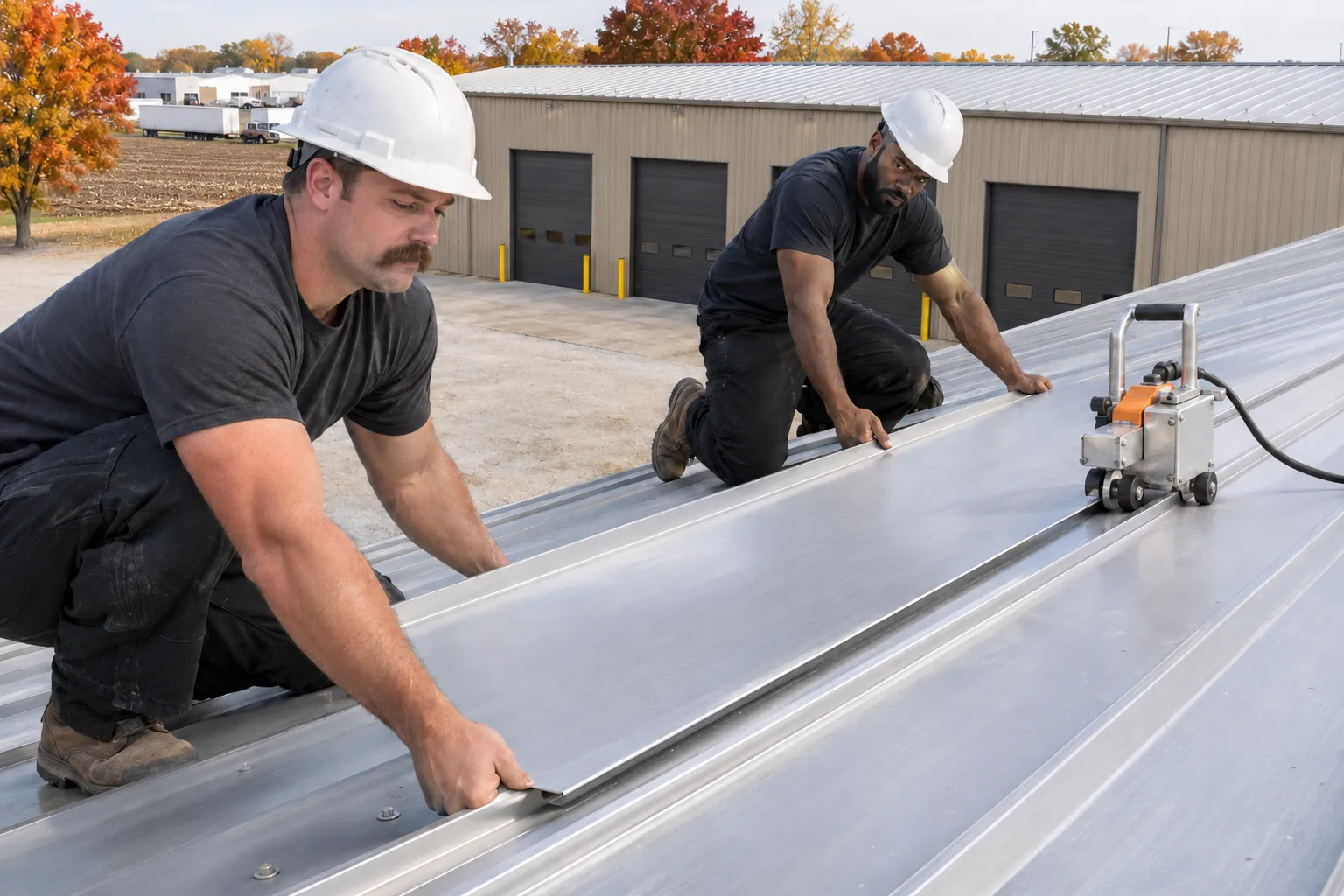
Standing-seam and ribbed panels for metal buildings, plus retrofit framing that sets new panels over a worn low-slope roof without a tear-off.
Commercial Metal Roofing in GreenwoodTell us where the stain or drip appears inside. We trace it on the roof, mark the seam or curb that let the water in, and price the fix or the new roof.
Every project moves through the same five decisions, in this order, so you know what happens before any material arrives.
We walk the whole roof, probe the seams, check every curb and drain, and cut cores where moisture readings run high. You get photos and a plain account of what we found.
Dry insulation over a firm deck can take a recover board and new membrane on top. Saturated layers or a rusted deck mean the old roof comes off first.
TPO, EPDM, and metal each match different slopes, foot traffic, and cooling loads. The estimate names the system, insulation, edge metal, and flashing details in writing.
Material lifts, dumpsters, and debris chutes go away from entrances, docks, and parking. Each day ends with the open section closed and watertight.
With the last section done, we walk the roof with your facilities contact, check drains and flashing, and hand over notes on the system installed.
A new roof is a large purchase. Here is what it does for the building and the people working under it.
Replacing soaked boards brings back the insulating value you paid for and stops the slow ceiling stains that follow every rain. The new membrane goes over boards that read dry.
Walkway pads and new curb flashing protect the paths technicians walk most. Fewer punctures around units means fewer drips into tenant spaces and stockrooms.
White TPO reflects sunlight that a dark roof would absorb, so the deck over a warehouse or store runs cooler while the cooling equipment below works through July.
Each estimate names the system, insulation, flashing, and whether old layers come off. You can line bids up item by item and plan the budget around a defined job.
Not sure your building sits inside our area? Please call us or send us a message. We install and replace commercial roofs in Greenwood, Franklin, Shelbyville, Bargersville, New Whiteland, and Whiteland.
Manufacturing roofs where exhaust stacks and process vents shape the membrane and flashing plan.
Warehouses, offices, and stores weighing TPO against EPDM by cooling load and rooftop traffic.
Shops and farm businesses with metal buildings, including new metal over tired low-slope roofs.
Retail and office roofs replaced in phases so tenants keep their doors open.
Distribution roofs staged around truck courts and dock doors, one section at a time.
Short answers to what owners ask on the first roof walk.
Systems
Pick TPO when the building carries a heavy cooling load or many rooftop units, since the white surface and welded laps handle both. Pick EPDM for cold-season flexibility and roofs that see little traffic. Existing layers and the deck help settle it.
Roofing on buildings used for business: warehouses, plants, offices, stores, churches, and schools. Most have low-slope membrane or metal panel roofs with drains, curbs, and rooftop equipment, and the work follows the commercial building code.
Lifespan
Membrane roofs that get yearly checks often reach 20 years or more, and standing-seam metal runs longer. Clogged drains, punctures from foot traffic, and storm damage left open shorten that span more than the calendar does.
Water that sits. Ponding at a high drain, a lap that opened in a storm, or ice backed up at a scupper keeps the membrane wet and lets freeze-thaw pry seams wider each winter.
Hiring
Ask for a roof walk before any price, a written scope that names the system and insulation, and a plan for closing the roof each day. Compare bids line by line rather than by the total alone.
Check before scheduling. Greenwood building permit applications go through the city's Community Development Services office, and statewide commercial rules come from the Indiana Building Code (675 IAC 13). Tear-off and structural changes matter most.
Book a roof walk for your warehouse, plant, or storefront. You get photos, a written scope, and a price for the roof system that fits the building.